WeRobot Home

Category

Developer Resources

9 articles

Chaos by Design: Why Engineers Are Deliberately Breaking Their Own Training Environments

Chaos by Design: Why Engineers Are Deliberately Breaking Their Own Training Environments

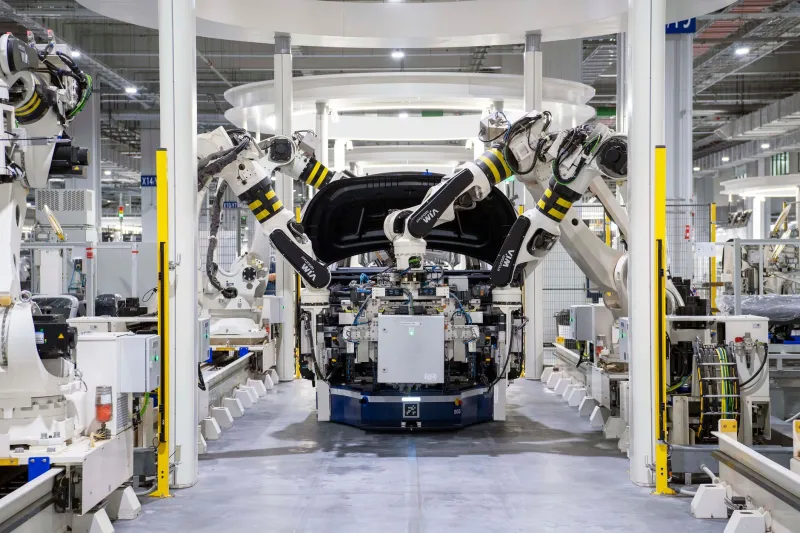
Controlled laboratory conditions have long been the gold standard for robot training—but that control may be the very thing undermining real-world performance. A growing cohort of robotics engineers is now systematically introducing variability, noise, and unpredictability into training pipelines to close the gap between lab benchmarks and factory-floor reality.

Blame the Bolts, Not the Code: How Undetected Software Defects Are Quietly Destroying Robotics Deployments

Blame the Bolts, Not the Code: How Undetected Software Defects Are Quietly Destroying Robotics Deployments

When an industrial robot fails catastrophically on the production floor, the instinct is to inspect the hardware first. Yet a growing body of evidence suggests that software defects—subtle, dormant, and extraordinarily difficult to reproduce—are responsible for a disproportionate share of costly failures. Robotics engineers are now confronting an uncomfortable truth: the industry's testing and verification culture has not kept pace with the complexity of the systems being deployed.

The True Cost of Robot Downtime—And the Field Engineers Keeping America's Automation Running

The True Cost of Robot Downtime—And the Field Engineers Keeping America's Automation Running

Unplanned downtime in automated facilities carries financial consequences that most deployment budgets never fully account for, and the engineers responsible for preventing and resolving it remain among the most underrecognized specialists in the industry. This article examines the economics of robotics maintenance, profiles the field service engineers who diagnose failures under pressure, and explores how predictive maintenance technologies are beginning to change the calculus for US operators.

Out of the Lab and Into the Wild: Engineering Robots That Survive Contact With Reality

Out of the Lab and Into the Wild: Engineering Robots That Survive Contact With Reality

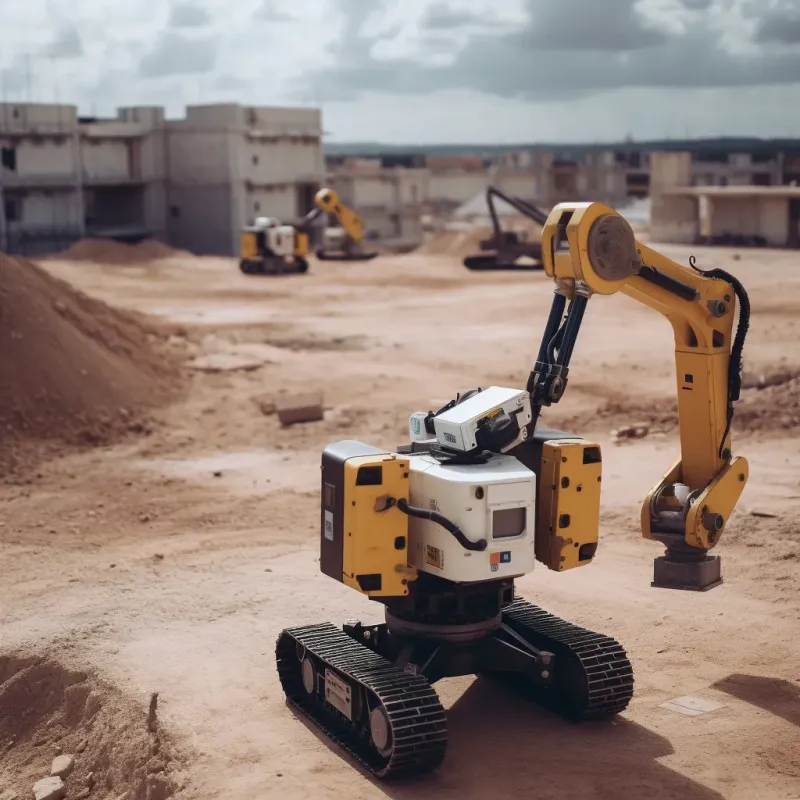
Controlled laboratory conditions are, by design, a lie — a carefully maintained fiction that allows engineers to isolate variables and validate performance before the messy, unpredictable real world intervenes. The gap between a robot that performs flawlessly in a test environment and one that operates reliably in the field is not merely technical; it is one of the most consequential challenges in modern robotics engineering. American companies working in logistics, construction, and disaster re

American Ingenuity, Engineered to Scale: How US Robotics Startups Are Defining the Next Decade of Automation

American Ingenuity, Engineered to Scale: How US Robotics Startups Are Defining the Next Decade of Automation

A new generation of American robotics startups — operating at the intersection of surgical precision, agricultural intelligence, and soft-material engineering — is assembling the technological and financial foundations for sustained global leadership in automation. Backed by record venture capital inflows and a policy environment increasingly oriented toward domestic innovation, these companies are advancing capabilities that their international competitors are only beginning to match. Here is a

Stack Up: The Developer's 2024 Guide to Robotics Frameworks, Simulators, and AI Platforms

Stack Up: The Developer's 2024 Guide to Robotics Frameworks, Simulators, and AI Platforms

Whether you are prototyping your first autonomous system or scaling a production-grade robotics application, the tools you choose will define the ceiling of what you can build. This guide breaks down the most consequential software frameworks, simulation environments, and AI development platforms shaping modern robotics engineering in 2024.

Build, Fork, Repeat: 5 Open-Source Robotics Projects Rewriting the Rules of Engineering

Build, Fork, Repeat: 5 Open-Source Robotics Projects Rewriting the Rules of Engineering

Open-source robotics is no longer the domain of hobbyists tinkering in garages—it has become a serious engineering discipline producing platforms that rival commercial systems in capability and far exceed them in accessibility. From university research labs in California to maker collectives in Massachusetts, these five projects are lowering the barriers to entry, accelerating innovation, and inviting engineers at every level to contribute to the machines of tomorrow.